New Zealand Yam (
Oxalis tuberosa) is neither a yam nor from New Zealand; in fact it's from the Andes and a member of the Oxalis family. It's called Oca in South America (one of several local names). The 'yam' part of the plant is a small pink, yellow or white roundish or finger-like stem tuber which can be eaten raw, steamed or baked. They are definitely popular in New Zealand because although I have never been across the Tasman I keep meeting New Zealanders who are intensely nostalgic about missing a "feed of yams" now that they live in Australia. I became interested in Oca when it was recommended in various sources as a delicious, perennial vegetable that is second only to potatoes for cropping in the Andes. Now "perennial" made me think "relatively easy to grow" but this is not necessarily the case. Producing plenty of tubers requires some basic cultivation knowledge and tricks; Oca is not set and forget as is the case for many annual and perennial vegetables alike.

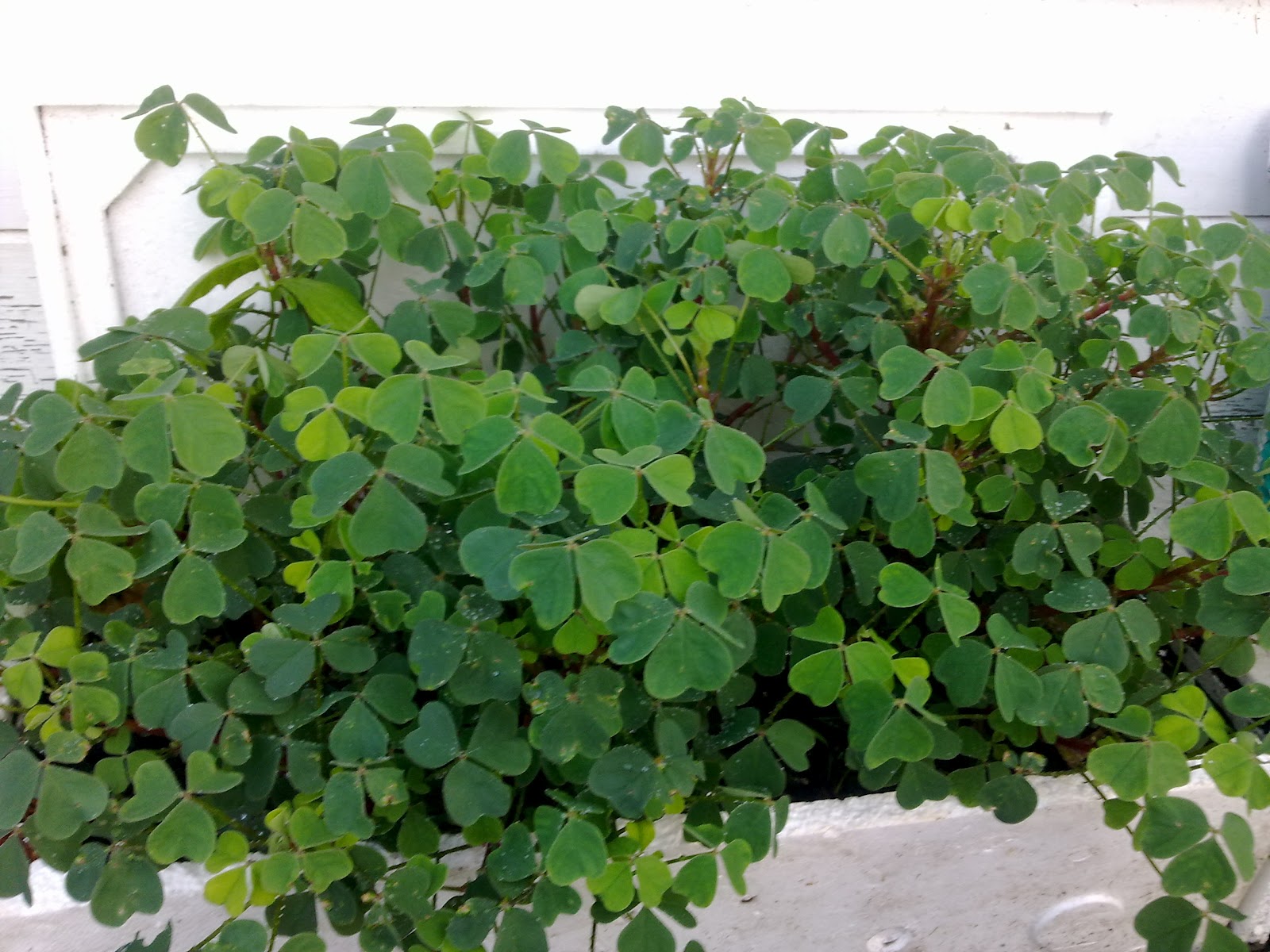
Before I explain what you need to know to grow plenty of Oca tubers, I will confirm that this is an attractive plant with green clover leaves growing off pinky-red stems. In early spring and then into autumn in Melbourne's temperate climate it looks lush and has quite a compact habit. It's when summer comes that things get tricky. Oca doesn't like hot days and on really hot days (more than say 32 degrees celsius) it wilts badly. In summer it tends to sprawl and in hot humid weather often rots at the base of the stems or just below the soil level. It is one of the worst performing plants in poorly drained soil that I have ever experimented with. When they say it likes well drained soil they really mean it.
Here's the problem. Oca's summer flopping wouldn't be so bad if it was producing tubers during this time but it doesn't. Like a lot of tropical plants Oca is a short day plant, meaning that it won't start producing tubers until the amount of day light is around 12 hours (or less) which for Melbourne, after summer, occurs at the autumn equinox on or around March 21. Having grown Oca for three years now it is extraordinary how tuber formation begins at this time like clockwork. The stems begin to produce stolons or subsidiary stems and then swell into tubers. Now as autumn nights get colder and longer this tuber production will continue until late May and even into June as long as you are in a frost free area.

So Oca growing means growing "useless" plants for around six months until late autumn when you have to start fussing over them to some degree. But here's the good news - Oca is extremely easy to grow from cuttings. So this year I took cuttings throughout spring and summer from plants in the ground that were waxing and waning in health depending on the weather. I sold quite a few at Sophia's Food Garden Open Day and the rest I put into makeshift raised beds before March 21. This was because there is no doubt that "hilling up" Oca plants (as you do for potatoes) really works. Unlike potatoes (which seem to produce plenty of tubers even if you don't hill them up) Oca seems to need its stems to be covered to help stimulate tuber production because they stay on or near the surface of the soil.
Now here's a confession, my first two years of growing Oca were disappointing precisely because I didn't keep piling up the free-draining soil or compost up and around the Oca stems as they grew. And last year my efforts were thwarted by Sophia's chooks which went mad for the sweet/sour Oxalis foliage and literally pecked them to death. Anyway, I'm writing this on April 28 and the tubers are forming nicely and very close to the surface of my various Oca stations. I have two lots in the ground around which I have pushed up lots of compost. I also have two lots of plants in a styrofoam raised beds; I just keep pouring more soil and compost over the top of them to cover the stems, effectively super-mulching them.


Have a look at the pictures, I hope it's relatively self-explanatory. I'll blog again about how they're going in about a month when I expect they will be ready to harvest or at least "bandicoot". By the way, Tansy the chef who runs the cafe at Burnley (whose partner John is an Oca-loving Kiwi) let me know that the potato man (Michael J Mow Gourmet Potatoes) at the Prahran market sells Australian grown Oca every year. This should be very soon I hope (see http://theindolentcook.blogspot.com.au/2010/09/oka-yams-love-at-first-bite.html. for an account of someone getting into Oca for the first time).




 Have a look at the pictures, I hope it's relatively self-explanatory. I'll blog again about how they're going in about a month when I expect they will be ready to harvest or at least "bandicoot". By the way, Tansy the chef who runs the cafe at Burnley (whose partner John is an Oca-loving Kiwi) let me know that the potato man (Michael J Mow Gourmet Potatoes) at the Prahran market sells Australian grown Oca every year. This should be very soon I hope (see http://theindolentcook.blogspot.com.au/2010/09/oka-yams-love-at-first-bite.html. for an account of someone getting into Oca for the first time).

